
Does masturbation or pornography cause acne, dark circles and ageing?
Quick answer
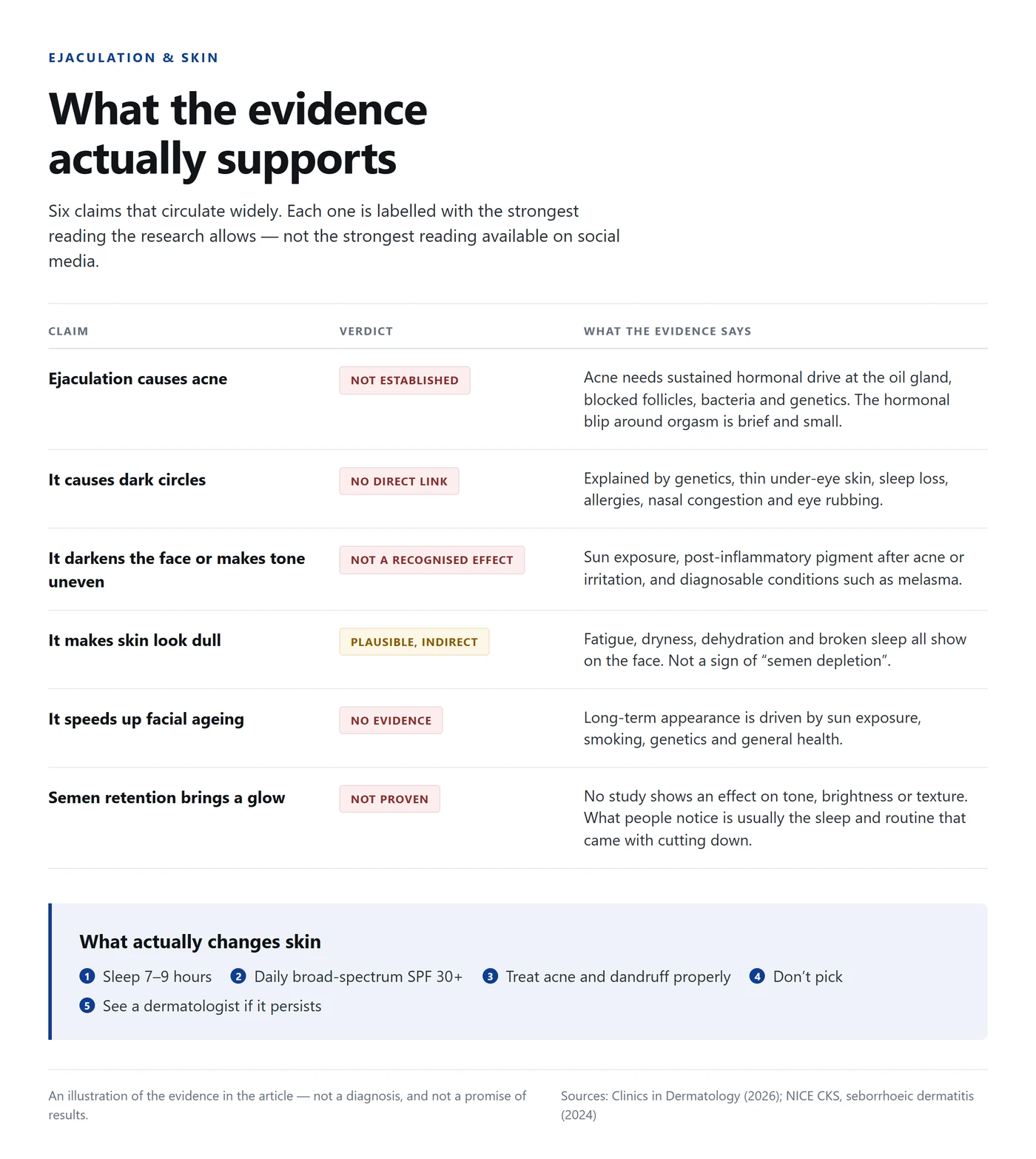
No: ejaculating does not cause acne, dark circles, dull skin or facial ageing, and no study shows that abstaining produces a glow. What does affect skin is sleep, stress, sun exposure, skipped skin care and irritation from picking.
Short answer: no. Ejaculating does not cause acne, dark circles, dull skin or facial ageing, and no study shows that abstaining produces a glow. But the changes some men notice during compulsive periods are real, and they have a different, fixable cause.
1. Does masturbation cause acne?
No. Acne is driven by sustained androgen activity, excess sebum, blocked follicles, bacteria and genetics. The hormonal changes around orgasm are brief and small, so they cannot produce the steady hormonal drive acne requires.
The myth rests on a broken chain of reasoning: masturbation raises testosterone, testosterone makes skin oily, oily skin causes acne. The chain fails at the first link. Controlled measurement after orgasm found testosterone unchanged, and the small short-lived fluctuations reported in earlier work return to baseline quickly. A few minutes of arousal is not the same as the day-after-day androgen activity that keeps an oil gland overactive for weeks.
Why the myth survives
Acne and masturbation both begin in puberty. Two things arriving at the same time feel connected, especially when nobody explains the difference between correlation and cause. The same error produces most of the other claims on this page.
What does cause acne
- Hormonal drive at the oil gland, sustained over weeks and months.
- Blocked follicles from oil and dead skin cells.
- Inflammation and the skin microbiome, including how skin responds to C. acnes.
- Genetics, which is why some people get it badly and others never do.
- Aggravating factors such as stress, poor sleep, picking, and products that clog pores.
Notice what is on that list and what is not. Stress and lost sleep are there, which is why cutting down can genuinely help, for reasons that have nothing to do with semen.
2. Does ejaculation cause dark circles or darker skin?
No direct link has been shown. Dark circles are usually explained by genetics, skin tone and thinness under the eye, sleep loss, allergies or nasal congestion, and eye rubbing. A tired face during a period of poor sleep is real, but the cause is the sleep.
Under-eye darkness is mostly anatomy: the skin there is thin, and what shows through is blood vessels and pigment. Some of it is inherited and permanent. Some is temporary and follows sleep, hydration, allergies and rubbing.
Uneven tone on the rest of the face
General facial darkening is not a recognised effect of ejaculation. The honest list of causes is short and testable:
- Sun exposure, the largest single contributor to uneven tone.
- Post-inflammatory pigmentation after acne, irritation, eczema or picking.
- Conditions that need diagnosis, such as melasma, seborrheic dermatitis, acanthosis nigricans and medication effects.
Every item on that list is treatable or preventable, and none of them requires abstaining from anything.
3. Dull skin and facial ageing
Dullness can be indirect. Ageing cannot. Dullness tracks fatigue, dryness, dehydration and broken sleep. Facial ageing is driven by sun exposure, smoking, genetics and overall health, not by ejaculation frequency.
“Dull” is a description, not a diagnosis. It usually means skin that reflects less light: a dry surface, dead-cell buildup, poor circulation from inactivity, or simply a face that has not slept. All of that responds to a routine, and none of it is evidence of “semen depletion”, which is not a physiological state that exists.
For ageing specifically, the variables with real evidence are sunscreen, smoking, alcohol, sleep and genetics. A behaviour that changes none of those cannot age you faster.
4. Is the “semen retention glow” real?
There is no scientific evidence for it. No study shows that abstaining from ejaculation improves skin tone, brightness or texture. What does have evidence is sleep, sun protection, treating acne and seborrheic dermatitis properly, and not picking at the skin.
Honesty has to run both ways here. Absence of evidence is not proof that every person who reports a glow is lying, but a claim that a practice transforms skin has to survive a study, and no such study exists. What people describe is better explained by what usually comes with cutting down: sleeping more, drinking less, exercising, and finally paying attention to their face.
The same applies in reverse. No fixed number of days of abstinence produces a documented skin change, and no honest source can tell you that day 15 or day 90 will look a particular way.
5. Why some men really do look worse during a compulsive period
None of the above means the change people notice is imaginary. It means the mechanism is somewhere else, and every one of these five is testable in your own week.
Sleep disruption
Late-night sessions shorten and fragment sleep. Poor sleep shows as fatigue, puffy or shadowed eyes and dull skin. This is the single most common honest explanation for “I look worse lately”.
Stress and emotional strain
Feeling out of control, guilt, anxiety, or using pornography to escape difficult feelings raises stress. Stress can aggravate acne, drive skin-picking, and remove the energy you had for everything else.
Skin-care and lifestyle neglect
Long sessions and distraction lead to missed cleansing, irregular meals, less exercise and less consistent sunscreen. Skin responds to that within weeks, which is exactly why the change feels like it arrived with the habit.
Friction and irritation
Repeated or rough masturbation can cause local soreness or irritation. It does not explain whole-face pigmentation, but inflammation can leave marks wherever it happens, and picking makes them worse.
Misattribution and timing
Skin changes happen around the same period as a habit without being caused by it: sun, genetics, acne, allergies, medication, a new product, a change of season. Two things happening together is not one thing causing the other.
| Concern | What the evidence allows |
|---|---|
| Darker skin or uneven tone | Not a recognised direct effect. Tanning, post-inflammatory pigmentation after acne or irritation, and diagnosable conditions explain it. Sun protection is the lever that matters. |
| Loss of brightness or dullness | Possible but indirect. Fatigue, dryness, dehydration and broken sleep all show on the face. It is not a sign of semen depletion. |
| Temporary dark circles | Indirect at most. Genetics, sleep, allergies, congestion and eye rubbing are the usual contributors. |
| Facial ageing | No evidence ejaculation accelerates it. Sun, smoking, genetics and general health drive long-term appearance. |
| Acne | Not established as a direct cause. Oil production, blocked follicles, inflammation, genetics and hormones are. Stress and lost sleep can aggravate it. |
| “Semen retention glow” | Not scientifically proven. No study supports a reliable effect. Sleep, hydration and sunscreen have evidence; retention does not. |
The distinction that matters: “no evidence that X causes Y” is not the same as “Y is imaginary”. Your skin can genuinely look worse during a hard period. The honest conclusion is that the mechanism is usually sleep, stress, a neglected routine and irritation, all addressable, and none of them requiring you to fear semen loss.
6. When pornography use becomes a clinical concern
Pornography use is not automatically an addiction. It becomes a concern when a persistent pattern of loss of control causes significant distress or real harm, and that harm shows up in ordinary life rather than in the mirror.
The signals worth taking seriously:
- lost sleep and a body clock that keeps shifting later
- reduced concentration and motivation
- missed responsibilities at work or in study
- distress, shame or anxiety that keeps growing
- relationship difficulties
- physical irritation from repeated friction
- repeatedly deciding to stop and not stopping
If two or three of those are true at once, the useful question is not “how do I purge my body” but “what is this behaviour doing for me, and what would replace it”. Behaviour design works far better than shame: identify the trigger, delay the urge by 10 to 15 minutes, replace it with something planned, and protect your sleep window. If attempts keep failing, a psychologist or doctor is the appropriate next step.
7. What changes when you cut down, and when
Timelines are where most guides start inventing. What is reasonable:
- Around 15 days
- More awareness of triggers, reclaimed time, and better sleep if the habit was keeping you awake. Tiredness and puffiness may ease purely because you are sleeping. No skin transformation is guaranteed.
- Around 30 days
- Routines and concentration may feel steadier. Any improvement in acne or dullness depends on sleep, stress, skin care and sun protection, not on the number of days.
- Around 3 months
- Sustained change may support better control, sleep consistency, mood and daily functioning. Skin may improve if the contributing factors were actually addressed.
There is no guaranteed 15-day, 30-day or 90-day skin transformation, and no universal abstinence timeline. Ejaculation frequency is not a skin-treatment variable. Anyone selling a fixed number of days is selling a story, not a result.
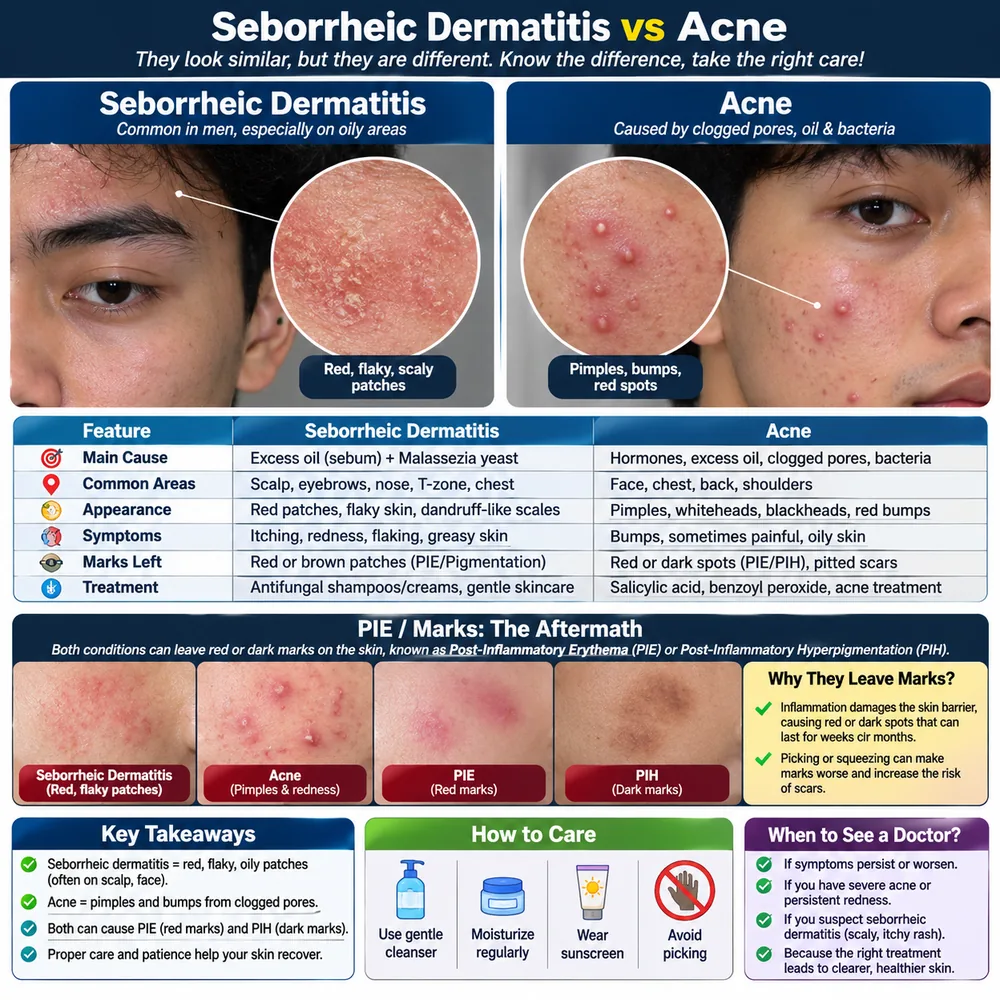
8. Seborrheic dermatitis vs acne: the difference that changes treatment
They are different conditions. Seborrheic dermatitis is an inflammatory response to Malassezia yeast and skin oils, showing as red, flaky patches in oily zones. Acne is blocked follicles with inflammation. Treating one as the other wastes months.
Skin-type labels, such as oily, dry, combination and sensitive, describe how skin tends to behave. They do not diagnose anything, and a person with oily skin can have either condition, or both.
| Feature | Seborrheic dermatitis | Acne |
|---|---|---|
| Typical appearance | Red, flaky or greasy patches; may itch | Blackheads, whiteheads, pimples, deeper bumps |
| Usual locations | Scalp, eyebrows, nose folds, beard, ears | Face, chest, shoulders, back |
| Underlying driver | Inflammatory response to Malassezia and oils | Blocked follicles, oil, inflammation, hormones |
| Marks left behind | PIE or PIH possible; patches and scaling rather than scars | PIE or PIH common; scarring possible if picked or severe |
| First-line treatment | Antifungal shampoo or cream, such as ketoconazole 2% | Benzoyl peroxide, salicylic acid, topical retinoid |
PIE and PIH: the two marks people confuse
- PIE (post-inflammatory erythema): pink, red or purplish marks from changes in small blood vessels after inflammation. More visible in some skin tones; fades gradually.
- PIH (post-inflammatory hyperpigmentation): brown, dark brown or greyish marks from increased pigment after inflammation. More common in medium-to-deep skin tones; sun exposure darkens it.
Picking, squeezing, scratching and harsh treatments prolong inflammation and raise the chance of marks or scars. Sunscreen is not cosmetic here: it is what stops PIH from getting darker while it fades.
9. What actually works for skin
A gentle cleanser, a moisturiser, broad-spectrum SPF 30+ in daylight, and treating any real condition properly. That is the whole evidence-based routine. Everything else is optional.
For diagnosed seborrheic dermatitis, guidance from the UK National Institute for Health and Care Excellence includes ketoconazole 2% shampoo twice a week for up to four weeks, then less often for maintenance, left on for five minutes before rinsing. Other medicated shampoos such as zinc pyrithione or salicylic acid are alternatives. A short course of a mild topical corticosteroid may be used for flares, but not continuously and not long-term on the face without medical guidance.
| Concern | Potentially useful | Cautions |
|---|---|---|
| Seborrheic dermatitis | Ketoconazole, ciclopirox, selenium sulfide; sometimes zinc pyrithione; gentle moisturiser | Use as directed; avoid fragranced products that trigger flares |
| Acne | Benzoyl peroxide, salicylic acid, adapalene where suitable, azelaic acid | Introduce gradually; irritation and dryness are common at first |
| Dry or sensitive skin | Glycerin, ceramides, hyaluronic acid; fragrance-free cream | Avoid harsh cleansing and multiple actives together |
| Oily or combination | Lightweight non-comedogenic moisturiser; gentle foaming cleanser; SPF | Do not over-wash; stripping the skin causes more irritation |
When to see a dermatologist
Persistent or worsening pigmentation, painful or scarring acne, unusual widespread darkening, redness or flaking that spreads or does not respond, or any skin symptom you cannot identify. The correct diagnosis matters, because the treatments for these conditions are genuinely different.
10. Sources and method
This page separates three things on purpose: established knowledge, plausible indirect pathways, and self-reports. Where the evidence is thin or contested, such as the retention glow, fixed timelines or ejaculation frequency, it says so instead of picking a side. It names no study it cannot point you at.
- Murphy T, Negrini E, Grant-Kels JM. Dermatology Disease Associations with Masturbation: Myth vs Facts. Clinics in Dermatology, 2026. doi:10.1016/j.clindermatol.2026.11.009 is a peer-reviewed review of the dermatological claims covered here.
- Exton MS, Krüger THC, Bursch N, et al. Endocrine response to masturbation-induced orgasm in healthy men following a 3-week sexual abstinence. World Journal of Urology, 2001;19(5):377–382. doi:10.1007/s003450100222, a controlled measurement of testosterone after orgasm.
- National Institute for Health and Care Excellence (UK). Seborrhoeic dermatitis, Clinical Knowledge Summaries. Last revised November 2024. cks.nice.org.uk, the source for the treatment guidance in section 9.
What this page does not claim. It is not a systematic review, it was not medically reviewed by a named clinician, and it cannot assess your skin. It is written to be honest about that rather than to look authoritative. Persistent, painful or scarring skin problems belong with a dermatologist; a behaviour that feels out of control belongs with a doctor or psychologist.
Common questions
Does masturbating cause acne?
No. Acne is driven by sustained androgen activity, excess sebum, blocked follicles, bacteria and genetics. The hormonal changes around orgasm are brief and small, so they cannot produce the steady hormonal drive acne requires. Acne and masturbation both start in puberty, which is why they are wrongly blamed on each other.
Does ejaculation cause dark circles under the eyes?
No direct link has been shown. Dark circles are usually explained by genetics, skin tone and thinness under the eye, sleep loss, allergies or nasal congestion, and eye rubbing. A tired face during a period of poor sleep is real, but the cause is the sleep, not the ejaculation.
Does stopping masturbation clear up acne?
No. Because masturbation does not cause acne, abstaining does not treat it. Skin often improves at the same time people cut down, but the change comes from the things that usually change alongside it: more sleep, less stress, and a routine that is actually followed.
Is the semen retention glow real?
There is no scientific evidence for it. No study shows that abstaining from ejaculation improves skin tone, brightness or texture. What does have evidence is sleep, sun protection, treating acne and seborrheic dermatitis properly, and not picking at the skin.
Does watching pornography cause skin problems?
Not directly. Skin problems appear during compulsive pornography use mainly through lost sleep, higher stress, skipped skin care and less movement. Pornography use is also not automatically an addiction; it becomes a clinical concern when a persistent loss of control causes real distress or harm.
Does masturbation cause hair loss?
No. Androgenetic hair loss is driven by genetics and the sensitivity of the skin to dihydrotestosterone, not by ejaculation frequency. There is no established mechanism and no evidence that cutting down regrows hair. Hair loss that concerns you is worth an assessment by a doctor, because treatable causes exist.
Does masturbation lower testosterone?
Not in any lasting way. Controlled measurement after orgasm found testosterone unchanged, and the small short-lived fluctuations reported in earlier work return to baseline quickly. There is no evidence of a sustained drop from normal sexual activity.
Why does my skin look worse after I ejaculate?
Usually because of what surrounds the habit rather than the ejaculation itself: late nights, broken sleep, stress, missed cleansing and sun protection, or friction and irritation. Timing alone is not causation, and conditions such as acne and seborrheic dermatitis flare on their own schedule.
How long until skin improves after cutting down?
There is no fixed timeline, and anyone selling 15, 30 or 90 days is selling a story. Sleep and puffiness can shift within a week or two. Acne and post-inflammatory marks follow their own course over weeks to months, and only if the real drivers are treated.
Is masturbating every day harmful?
Not in itself. There is no health rule requiring a particular frequency in either direction. What matters is whether it displaces sleep, responsibilities or relationships, causes physical irritation, or feels out of your control. Frequency is not the diagnostic question; loss of control and harm are.