
Defining an audience by what it is trying to do
Quick answer
Demographics describe people; they do not predict behaviour. How to write an audience definition that changes what you make.
An audience definition is only useful if it changes a decision. “Students aged 18 to 24 in urban areas” does not change any decision, because it includes people buying for incompatible reasons and excludes people buying for the same reason.
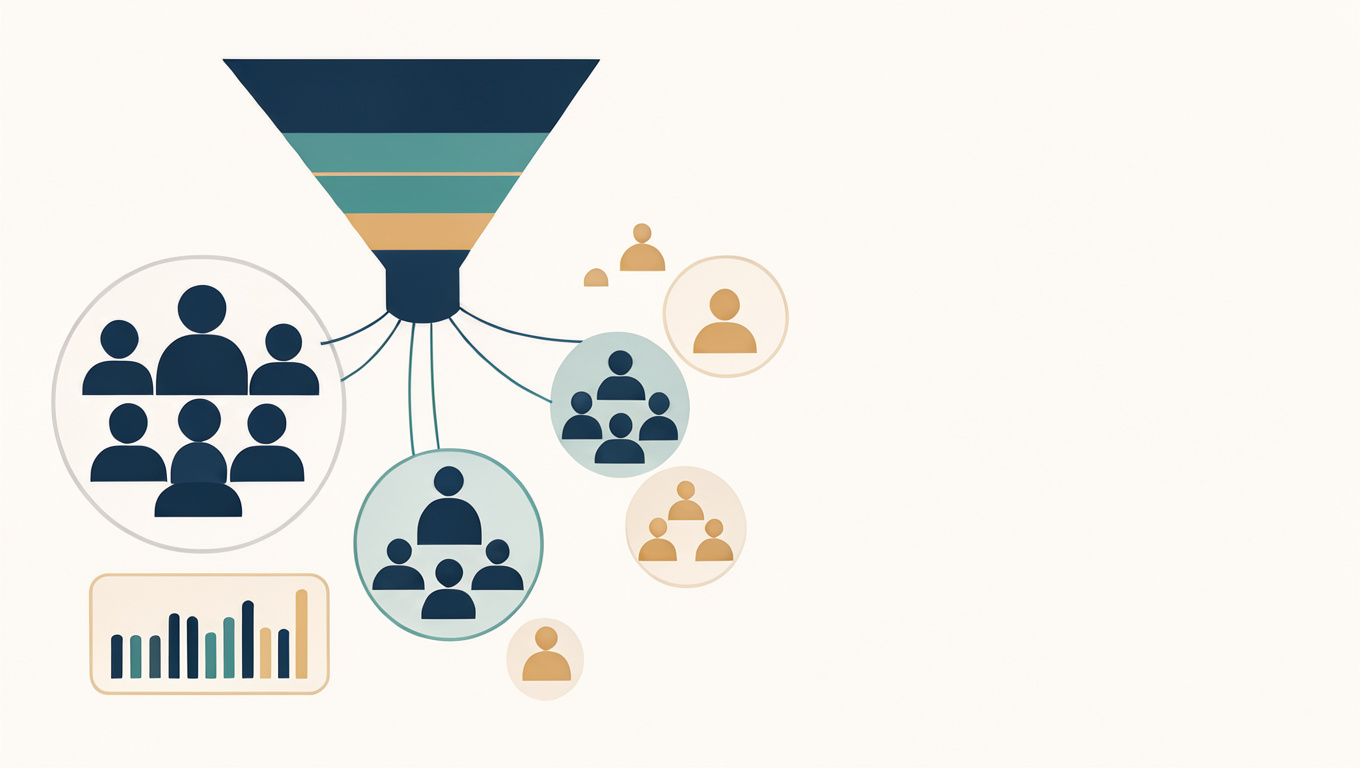
The substitution that fixes it
Describe the job the person is trying to get done, then the constraint that decides how they do it. A workable template:
Someone who needs to [outcome] before [deadline or trigger], who currently does it by [current method], and for whom the main obstacle is [constraint].
Two people with different ages, incomes and locations but the same outcome, trigger and constraint are the same audience. Two people of the same age buying for different reasons are not.
The three questions that test a definition
- Who is excluded? A definition that excludes nobody has specified nothing. Naming who this is not for is the fastest check on whether it is real.
- What would we stop doing? If the definition does not imply cutting a channel, a message or a feature, it is a description rather than a decision.
- How would we know we were wrong? If no observation could falsify it, it is not a hypothesis about the world.
The trigger question. Almost every purchase has a trigger: a deadline, an event, a failure of the current method. A message that names the trigger outperforms one that names the demographic, because the trigger is when the person is actually deciding.
Why the segments you can buy are not the audiences you need
Advertising platforms offer targeting by age, location, interest and behaviour. Those categories are useful for delivery and poor for strategy, because they describe correlates rather than reasons. The reason lives in the trigger and the constraint, and it is found by talking to people, not by configuring an ad account.
The practical combination: use the platform categories to reach a broad pool, and use the message to do the segmentation. The message names the trigger; the people for whom it is true respond, which is the correct outcome for everyone else.
Three audiences most definitions leave out
The person who says no. In many purchases the user is not the buyer, and the blocker is not the person you are marketing to. A parent, an employer, an administrator or a finance team can defeat a decision that was already made.
The person who already tried. Someone who has used a competitor and left is not the same audience as someone who has never bought, and they need an answer about why the previous attempt failed rather than an introduction to the category.
The person who does not know the category exists. This audience needs a problem named, not a product described, and treating them as a ready-to-buy segment produces the flat response that gets attributed to bad creative.
Doing the research with no budget
Five conversations beat fifty survey responses for finding the trigger. Ask about the last time they had this problem rather than about their preferences: what happened, what they did first, what they tried next, what finally worked, and what it cost them.
The rule that makes these conversations worth having: ask what they did, not what they would do. Stated intentions are cheap; behaviour has already been paid for.
Where it connects
Once the audience and trigger are named, the message is a claim about how you solve the job, which puts you in claims and substantiation. If you are going to contact them, read data privacy for marketers first.
What to do with the definition once written
A definition that lives in a slide changes nothing. The three places it should be applied: the message, which names the trigger rather than the demographic; the channel, which should be where that audience already is; and the product, which should be scoped to the constraint rather than to everything the team wants to build.
The test of whether it was applied is whether something got cut. A definition that leaves every feature, every channel and every message intact has been filed rather than used.
Two audiences, or one
Serving two genuinely different audiences with one message produces a message that fits neither, because the compromise is made in the copy rather than in the strategy. Where the audiences differ in trigger or constraint, they need separate pages even if the product is the same.
The exception is where one audience is a route to the other. A student and the parent funding them differ in constraint but the message can name both, provided it is clear which one is being asked to act. Ambiguity about who acts is what makes combined messaging fail.
Constrain the message, not just the audience
A definition that names the constraint also names what the message has to address, which is usually more specific than the feature list. If the constraint is cost, the message is about the arithmetic; if it is time, the message is about the sequence. A message that addresses neither is a feature list with adjectives.
This is also where most messaging tests become interpretable. A test between two messages that address the same constraint tells you about wording. A test between two messages that address different constraints tells you which constraint is real, and that is more valuable.
Common questions
Why is demographics a weak way to define an audience?
Because demographics describe correlates rather than reasons. Two people of the same age can be buying for incompatible reasons, and two people of different ages can share the same trigger and constraint.
What should an audience definition include?
The outcome the person needs, the trigger or deadline, how they currently solve it, and the main constraint. That definition changes decisions; a demographic description does not.
Should I ask people what they would buy?
No. Ask what they actually did the last time they had the problem. Stated intentions are cheap and behaviour has already been paid for.